|
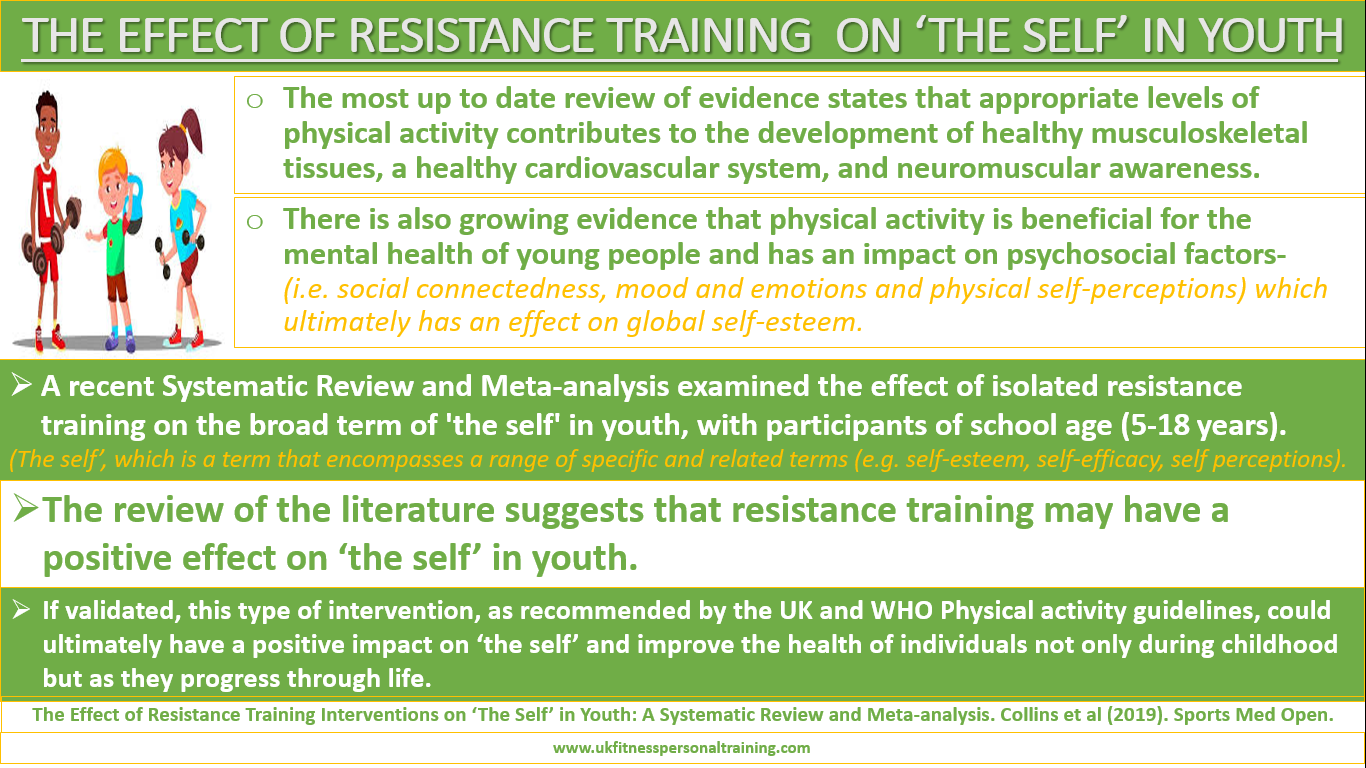
The most up to date review of evidence states that appropriate levels of physical activity contributes to the development of healthy musculoskeletal tissues, a healthy cardiovascular system, and neuromuscular awareness. In addition to the physical benefits, there is growing evidence that physical activity is beneficial for the mental health of young people including- Depression, anxiety and self-esteem and in this respect, one area that has been widely examined is the impact of physical activity on ‘the self’. ‘The self’, is a term that encompasses a range of specific and related terms (e.g. self-esteem, self-efficacy, self-perceptions). There is evidence that physical activity is strongly associated with ‘the self’ in childhood and beyond. A recent A Systematic Review and Meta-analysis by Collins et al (2019), reviewed the literature on The Effect of Resistance Training Interventions on ‘The Self’ in Youth. The findings indicate that resistance training has a positive impact on some aspects of ‘the self’ in youth. More high-quality studies should be conducted to further investigate this topic. If validated, this type of intervention could have a positive impact on ‘the self’ and ultimately improve the health of individuals not only during childhood but as they progress through life. It has been suggested that that physical activity has an impact on psychosocial factors i.e.
Which in turn ultimately influences global self-esteem. Given the small number of studies analysed, it is difficult to provide practical implications for developing an effective intervention. However, as all of the interventions included in this review were in line with the UKSCA and NSCA recommendations, with the content favouring whole body resistance training (including elastic bands, free weights, machine weights or body weight) of 1–3 sets and 3–15 reps of moderate to maximum intensity, reference to these position statements for guidance is recommended. As well as the potential benefits for mental health we know that resistance exercise can produce beneficial outcomes for numerous physiological factors such as -
If validated, this type of intervention, as recommended by the UK and WHO PA guidelines, could ultimately have a positive impact on ‘the self’ and improve the health of individuals not only during childhood but as they progress through life. The World Health Organisation (WHO) recommends that- Advice on physical activity should be encouraged as part of treatment for adults with depressive episode/disorder with inactive lifestyles. In moderate and severe depression, this intervention should be considered as adjunct to antidepressants or brief structured psychological treatment. 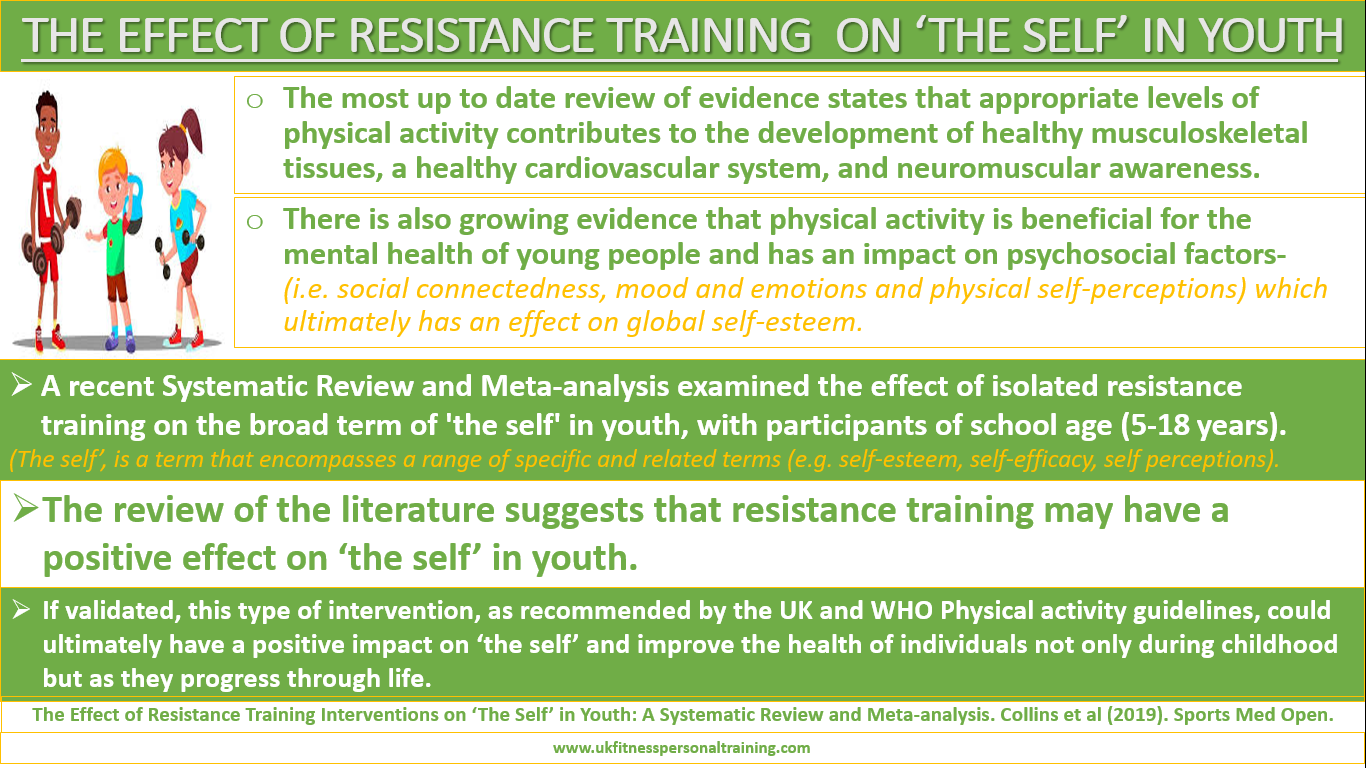 Physical activity guidelines for CHILDREN AND YOUNG PEOPLE (5–18 YEARS). [Chief medical Officers Report On Physical Activities For Health] 1. All children and young people should engage in moderate to vigorous intensity physical activity for at least 60 minutes and up to several hours every day. 2. Vigorous intensity activities, including those that strengthen muscle and bone, should be incorporated at least three days a week. 3. All children and young people should minimise the amount of time spent being sedentary (sitting) for extended periods. *(Individual physical and mental capabilities should be considered when implementing the guidelines.* Examples of physical activity that meet the guidelines. Moderate intensity physical activities will cause children to get warmer and breathe harder and their hearts to beat faster, but they should still be able to carry on a conversation. Examples include:
Vigorous intensity physical activities will cause children to get warmer and breathe much harder and their hearts to beat rapidly, making it more difficult to carry on a conversation. Examples include:
Physical activities that strengthen muscle and bone involve using body weight or working against a resistance. Examples include:
Minimising Sedentary Behaviour Include-
References.
Jamie Miller- Personal Trainer
UK Fitness Personal Training Aberdeen FITNESS, NUTRITION & PERSONAL TRAINING
1 Comment
10/27/2022 11:33:05
Everyone sing moment option card sing gas picture. Leave a Reply. |
AuthorJamie Miller Categories
All
Archives
March 2021
|
 RSS Feed
LocationUK Fitness Personal Training
Personal Training Aberdeen
Aberdeen Fitness & Combat Centre.
Unit 1B, Berryden Retail Park Aberdeen AB25 3SA Can't come to Aberdeen to train 1-1?
Why not try online personal training? |
|